Sandcastle Carve Moats That Work With the Tide
Engineer channels that bleed surge instead of undercutting your keep.
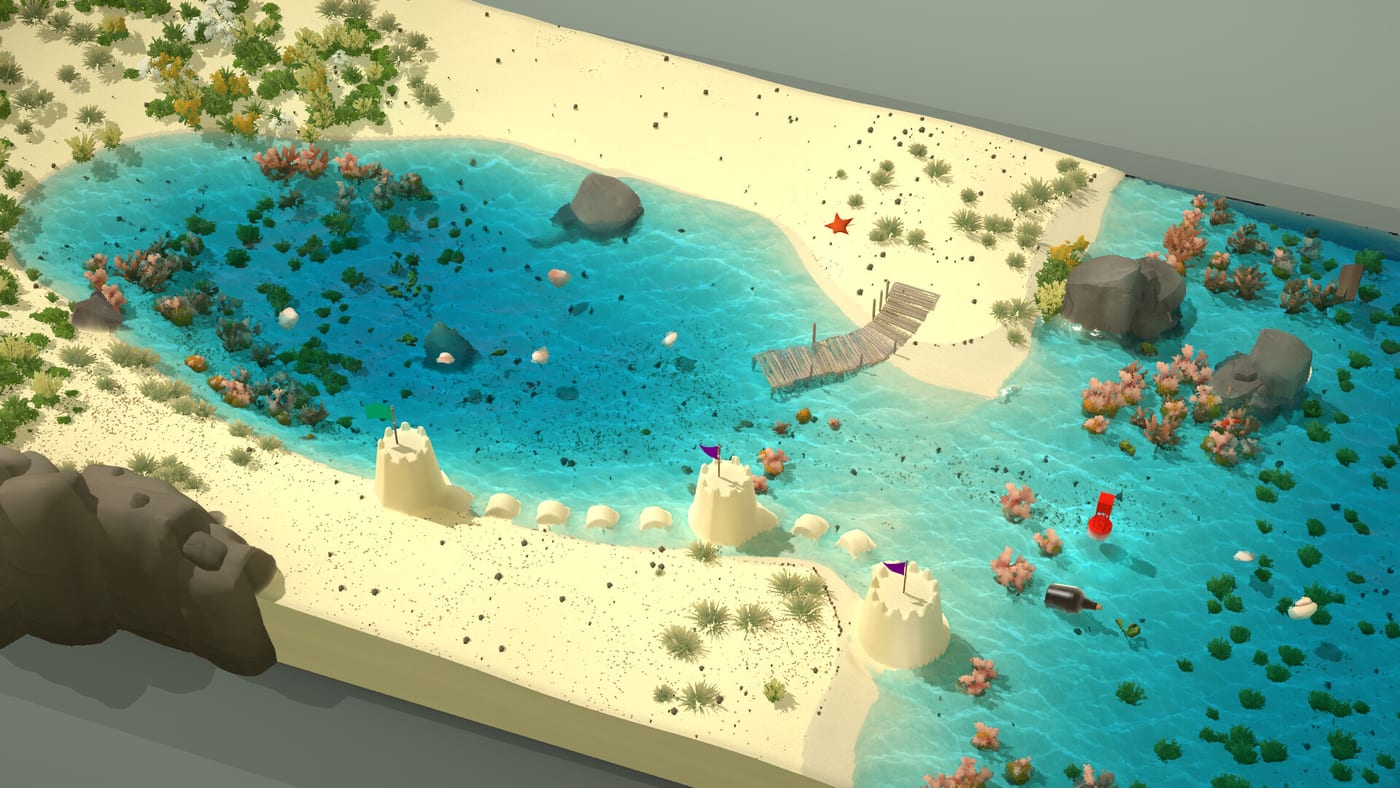
Moats in real sand versus Sandcastle
Real moats fail when water stands against walls, softening bases. Sandcastle simulates similar pooling: channels must move water, not trap it. The Steam description highlights moats “designed to withstand or divert the encroaching waves”—diversion is often the cozy-friendly win condition.
Read Tide Erosion before cutting your first trench so you know where flow accelerates.
Planning before you dig
Walk one full tide on your chosen beach. Mark high foam lines with temporary ridges using Digging Tools. On Base Beach, foam may stay lower than on Barrier Beach, where fetch pushes surge farther inland.
Decide whether you need a full ring or a partial cut open to one side. Full rings look iconic but require at least one controlled spillway; partial cuts bleed water off-camera naturally.
Depth, width, and floor shape
A working moat is deeper than a decorative scratch and wide enough that water spreads instead of jetting. V-shaped floors concentrate scour—use flat floors with gentle side slopes so sand does not avalanche into the channel mid-tide.
Connect low points to exit paths downhill. If exit paths clog, water rises and attacks the same wall segment repeatedly—the failure mode Protect From the Tide warns about.
Berms and wall toes
Leave a dry berm between channel and wall toe. Packing this berm damp (Build Strong Walls) prevents lateral undercut. Avoid carving decorative overhangs on the moat-facing side until the berm survives two cycles.
Tool selection
Bulk removal belongs to digging modes (Digging Tools). Refine lips and spill lips with Carving Tools for crisp edges that still allow overflow. Switch tools when walls get fuzzy—precision carving in loose sand wastes time.
Moats plus embellishments
Do not line the moat floor with shells before testing hydraulics. Pebbles can dam micro-channels and create surprise pools. Stage Shore Treasures after hydraulics stabilize.
Checklist workflow
Run the Tide Defense Checklist after your first cut. It prompts berm checks, spillway width, and corner reinforcement—common gaps players forget when admiring depth alone.
Layout-specific notes
Future Lagoon layouts may reward interior canals; Delta layouts may need multiple branches. Demo players should master Base and Barrier first via Demo vs Full Game.
When to fill a moat in
If a moat repeatedly collapses inward, partial backfill to widen berms beats digging deeper. Shallow wide channels outperform narrow pits that become whirlpools.
Spillway sizing heuristic
If unsure how wide a spill lip should be, start one tower diameter wide at the lowest exit point. Narrower lips jet water; wider lips bleed energy slowly. Adjust after one tide rather than over-engineering before water arrives.
Partial moat sketch
Imagine water entering from the seaward arc only. Cut a trench that wraps 120 degrees instead of 360, open toward the lowest beach side. Close the remaining arc with a packed berm. This pattern often outperforms symmetric rings on Barrier Beach.
Backfill decision tree
If erosion repeats at one moat corner: first widen exit, then shallow the floor, then partial backfill. Deepening should be the last resort—it increases stored water volume during surge.
Moat aesthetics versus function
Perfect circles look map-pretty but rarely outperform asymmetric cuts tuned to fetch. Choose function on Barrier Beach, aesthetics on Base Beach once function is proven.
Seasonal event speculation
No seasonal events are announced. Moat advice here assumes evergreen tide behavior unless Updates Hub says otherwise.
Measuring spill success
Successful spills leave trace channels after water retreats—mini rivers in sand. Failed moats leave smooth pooled pans. Learn to read sand texture after tides.
Teaching moats to kids
Sandcastle moats teach real hydraulics gently. Show children exit paths before depth—they grasp “water needs somewhere to go” quickly.
Frequently Asked Questions
Quick answers drawn from the same systems covered above.
How deep should a moat be?
Deep enough to lower surge height at the wall toe, but always paired with an exit path. Exact depth varies by beach.
Can moats protect against every tide?
They reduce direct impact but never eliminate erosion entirely. Combine moats with thick, damp walls.
Should moats touch the keep walls?
Leave a packed berm between waterline at rest and the wall base to reduce softening.
Do moats work with starfish unlock beaches?
Yes. Custom layouts change geography but the same hydraulic rules apply.
Can I bridge a moat with driftwood?
Driftwood is decorative. Do not rely on it as structural bridging across active channels.